What Happens When the Box Your Audience Built for You Gets Too Small to Breathe In
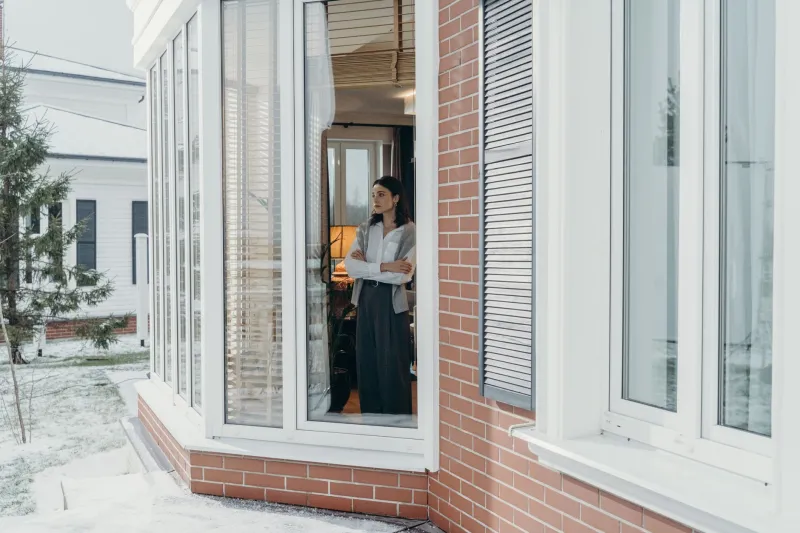
There's a specific kind of loneliness that doesn't have a great name yet. It's not the loneliness of being unknown — that one's talked about plenty. This is the loneliness of being known, really known, but only for the version of you that existed two or three years ago. The version you've quietly outgrown. The version that, if you're being honest with yourself, you're not even sure you liked all that much.
And yet every time you open your phone, there she is. Reflected back at you in comments, in DMs, in the way people introduce you at events. "Oh, this is Cassie — she's the one who does that thing." The thing. The one thing. The thing that got you here.
You're grateful for it. You really are. But gratitude and suffocation can exist in the same chest at the same time, and nobody really prepares you for that.
How the Box Gets Built in the First Place
It usually starts innocently. One piece of content hits different. Maybe it's a video, a series, a specific vibe you leaned into during a particular season of your life. People respond, the algorithm rewards it, and so you do more of it. Naturally. Logically. That's just how this works.
But here's what's actually happening underneath all that momentum: your audience is forming a mental contract with you. They're filing you under a specific category in their brain. You become the person who talks about this, who looks like that, who shows up in a very particular way. And because human brains love predictability, they start to resist anything that disrupts the filing system.
You didn't sign anything. Nobody handed you a document. But the contract exists, and the day you decide to color outside the lines, you'll feel exactly how real it is.
The Guilt Trip You Give Yourself
Here's the part nobody talks about honestly enough: a lot of the resistance you feel isn't even coming from your audience. It's coming from you.
There's a specific guilt that comes with evolution when other people have invested in who you were. Those early followers — the ones who found you when you had three hundred people watching — they believed in something. They showed up before the numbers made sense. And now you want to change the channel on them?
It feels like a betrayal. Even when it isn't. Even when growing is the most natural, healthy thing you could possibly do.
I've sat with that guilt. I've posted things and immediately felt the urge to apologize in the caption, to over-explain, to cushion the shift with so many disclaimers that the original point got buried. That impulse to manage everyone's feelings about your own growth is exhausting — and it's also a sign that you've started treating your audience like a parent whose approval you need rather than a community you're in relationship with.
Those are very different dynamics, and mixing them up will mess with your head.
What "Expanding Your Lane" Actually Looks Like in Practice
Okay, so you want to grow without blowing everything up. Here's what I've found actually works — slowly, imperfectly, but works.
Start with the thread, not the pivot. Instead of announcing that you're going in a completely new direction, find the connective tissue between who you've been and who you're becoming. If you built an audience around fitness content and you're moving into mental health conversations, those aren't actually that far apart. Show people the bridge. Help them walk across it with you instead of just appearing on the other side.
Let your curiosity be visible. One of the most disarming things you can do is let people watch you get interested in something new in real time. You don't have to be an expert. You don't have to have it figured out. "I've been really into this lately and I don't totally know why yet" is a more compelling invitation than a polished rebrand that drops out of nowhere.
Give your core audience credit. A lot of creators underestimate the people who've been with them longest. The audience members who've been around for years have watched you change before — your hair, your relationships, your opinions on things. They're more adaptable than the comment section makes them look. The loudest voices aren't always the most representative ones.
Accept that some people will leave. This one's not a strategy so much as a permission slip. Not everyone who found you at chapter one is meant to be there at chapter seven. Some readers put the book down. That's not failure. That's just how stories work.
The Typecast Problem Is Real, But It's Not Permanent
Hollywood has a version of this — the actor who plays the same role for a decade because casting directors can't see past their most famous character. Creators deal with it too, just on a more personal, more intimate scale. Because unlike an actor, you're not playing a character. You're playing yourself. Which means being typecast hits differently.
But here's the thing about being typecast: it's a perception problem, not an identity problem. Your audience's mental file folder for you can be updated. It just takes time, repetition, and a willingness to hold steady through the period when things feel awkward and the numbers dip and the comments get weird.
The dip is real. I won't pretend it isn't. When you start introducing new dimensions of yourself, engagement often drops before it climbs again. That's the algorithm adjusting, but it's also just people adjusting. Give them a minute.
You Were Never Just One Thing
Here's what I keep coming back to when this feeling gets heavy: the people who love you most — not just follow you, but actually love what you make — they don't want a greatest hits loop. They want to know what you're thinking about now. They want to grow alongside you.
The audience worth building isn't the one that freezes you in amber. It's the one that says I don't know exactly where she's going, but I want to see how it turns out.
You were never just one thing. You were just only showing one thing for a while. There's a difference, and it's worth holding onto when the box starts feeling small.
Breathe. Expand. Let the walls move.
You're allowed.