What Getting Forgotten Actually Did for My Creative Life

Somewhere between my third year of creating and now, something shifted. The notifications slowed down. The DMs got quieter. A piece I worked really hard on got maybe a third of the engagement I expected, and instead of spiraling, I sat with my coffee and thought: huh, okay.
That was new.
Because for a long time, I measured everything — my worth, my momentum, my relevance — by how loudly the internet was paying attention. And then one day, it just... wasn't. The algorithm moved on. New voices showed up. People found their next favorite thing. And I was left standing in a room that used to feel like a stadium and now felt more like a living room.
Here's the part I didn't expect: I loved it.
The Weight You Don't Know You're Carrying
When people are watching, you perform. Even when you swear you're not. Even when you genuinely believe you're being completely yourself, there's some version of you in the back of your head thinking about how this lands, how this reads, whether this moment is too much or not enough.
I didn't realize how exhausted I was from that constant low-grade performance until the audience got smaller and the pressure quietly dissolved.
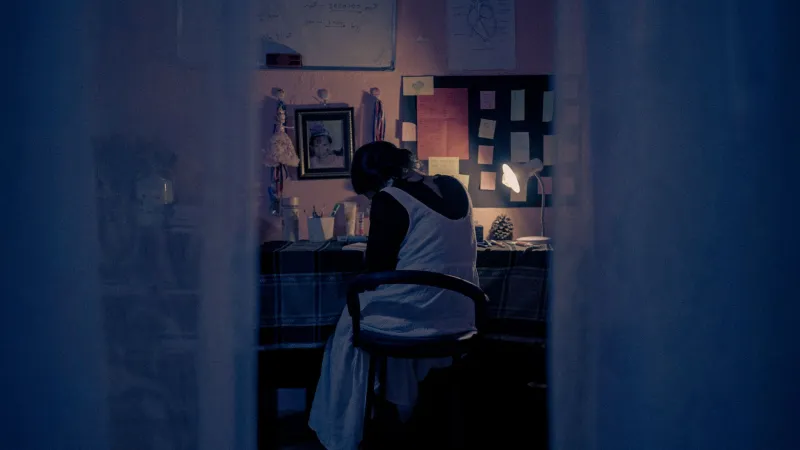
I started writing things I didn't know how to pitch. I started making stuff that didn't have a hook. I recorded a voice memo at 2am that wasn't meant for anyone, and it turned out to be one of the most honest things I'd made in years. None of it was optimized. None of it was strategic. It was just me, actually making things again, without the invisible crowd in the corner of my eye.
That's the weight you don't know you're carrying until someone takes it off your shoulders without asking.
The Creator Economy Lies About What Visibility Means
We've been sold this idea that more eyes equals more impact equals more success. And look — I get it. There's a version of that equation that's true. Visibility opens doors. Reach matters if you're trying to build something sustainable.
But the creator economy has a funny way of flattening everything into metrics, and metrics have a funny way of becoming the whole point. At some point, I stopped asking is this good? and started asking will this perform? Those are not the same question, and the gap between them is where a lot of creative souls quietly go to die.
Getting forgotten — even partially, even temporarily — forced me back to the first question. Because when you're not chasing reach, you have no choice but to chase something else. And for me, that something else turned out to be quality. Honesty. The kind of work that feels true even if it never trends.
Smaller Isn't the Same as Lesser
There's a cultural story in the US that goes: if you're not growing, you're dying. Scale up or get out. More followers, more income streams, more content, more presence. And I swallowed that story whole for a long time.
But I've watched creators burn themselves completely out chasing growth that was never going to make them feel the way they thought it would. I've seen people hit numbers they dreamed about and feel emptier than before. And I've also seen people quietly step back, build something smaller and more intentional, and find more meaning in that than they ever did at the peak.
Smaller doesn't mean lesser. It means you get to choose who's in the room.
When my audience got smaller, the people who stayed were the ones who were actually there. Not casual scrollers, not people who showed up for a trend — the ones who kept reading, kept responding, kept sending me messages that started with this is exactly what I needed to hear. That's not a consolation prize. That's the whole point.
What the Quiet Actually Makes Room For
Here's what I've been able to do since I stopped being the main character in my own algorithmic story:
I finished a personal project I'd been putting off for two years because I couldn't figure out how to make it "content." I had lunch with a friend and didn't think once about whether the moment was postable. I rewrote an old piece just because I wanted to, with zero plan to publish it. I took a creative risk that I would have talked myself out of during a high-visibility season because the stakes felt too high.
The quiet made room for all of it.
There's something almost counterintuitive about this: when fewer people are watching, you often do your bravest work. Because bravery and performance don't coexist well. You can't really go out on a limb when you're also trying to manage how the limb looks on camera.
Redefining What It Means to Show Up
I'm not here to tell you to abandon your goals or stop caring about building an audience. That's not the point. The point is that visibility is a tool, not a destination — and when it becomes the destination, something important gets lost.
Showing up consistently doesn't have to mean showing up loudly. Some of the most meaningful creative work happens in the margins, in the off-seasons, in the years where you're not the one everyone's talking about. That's where you figure out what you actually think, what you actually want to make, who you actually are when no one's keeping score.
I spent a long time being afraid of being forgotten. Now I think it might have been the best thing that happened to my creative life.
Not because invisibility is the goal. But because it gave me back something I didn't know I'd handed over: the freedom to make things that mattered to me first, before they had to matter to anyone else.
And honestly? That's the version of this work I want to keep doing.