A Thousand People Know My Story and I've Never Felt More Alone
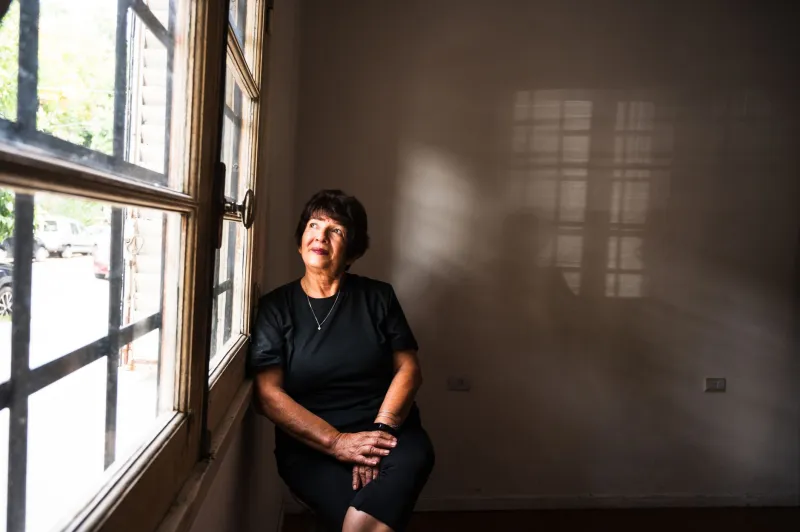
I remember the first time I posted something truly personal. Not the curated kind of vulnerable — not the "here's a lesson I learned" story with a tidy bow on the end — but the messy, unresolved, I-don't-know-how-this-turns-out kind. The response was overwhelming. DMs flooded in. Comments stacked up. People said things like I thought I was the only one and this is exactly what I needed today and you just put into words what I couldn't.
And I sat there reading every single one of them, genuinely moved, genuinely grateful — and also, somewhere underneath all of that, profoundly lonely.
I didn't understand it at the time. How could I feel lonely when so many people were reaching out? How could I feel unseen when thousands of eyes had just witnessed something I'd barely admitted to myself? It took me a long time to untangle what was actually happening. And once I did, I couldn't un-see it.
The Illusion of Intimacy Is Surprisingly Convincing
Here's the thing about sharing your story online: it creates a one-way mirror. Your audience sees you — really sees you, sometimes in ways that feel startling — but you don't see them back. Not in any real way. You see usernames. You see a comment. You see a like. You get a fragment of a stranger's reaction, stripped of context, stripped of their face, stripped of everything that makes human connection actually feel like connection.
But your brain doesn't always register the difference. Especially when the responses are warm. Especially when someone writes you a paragraph about how your words changed something for them. That feels like intimacy. It mimics the texture of being known. And for a second — sometimes longer — it fills the space where actual closeness would go.
The problem is it doesn't hold. You wake up the next morning and those thousand people have moved on to the next thing in their feed. They carry a piece of your story with them, sure. But they're not thinking about you. They're not checking in. They're not showing up the way a friend does. They consumed your vulnerability, and then they kept scrolling.
And you're still sitting with the thing you shared.
What It Actually Costs to Keep Showing Up
I've talked to a lot of other creators about this — people at different stages, different platforms, different audiences — and the experience is remarkably consistent. The more openly you share, the more your audience feels like they know you. And the more they feel like they know you, the more the gap between that perception and your actual reality starts to ache.
Because here's what your audience doesn't see: the hour before you hit publish when you're second-guessing everything. The weird emotional hangover that sometimes follows a post going viral. The fact that you shared something huge and then had to go make dinner and do laundry and answer emails like a regular person, while strangers are still processing your confession in their comment sections.
You're expected to be both the story and the storyteller. The wound and the lesson. The person who's still in it and the person who's already made it make sense. That's an exhausting place to live.
And the loneliness compounds when you realize that the people who do know you — your actual friends, your family — often aren't your audience. Sometimes they don't follow your work. Sometimes they do, and it creates its own weird dynamic. But either way, the intimacy you're performing online isn't being received by the people in your physical life. You're pouring yourself out to strangers while the people sitting across from you at Thanksgiving have no idea.
Parasocial Isn't a Dirty Word, But It Has Limits
I want to be careful here, because I don't think parasocial relationships are inherently bad. There's real value in what happens when a creator's honesty meets an audience's recognition. People find community. They feel less alone. That matters — genuinely. I've heard from people who said something I wrote got them through a hard week, and I don't take that lightly.
But parasocial connection has a ceiling. And the problem isn't that your audience doesn't care — a lot of them really do, in their way. The problem is that caring from a distance, through a screen, with no shared history and no mutual vulnerability, is structurally different from the kind of connection that actually sustains you.
Your audience can love a version of you. They can root for you, worry about you, celebrate you. But they can't know you. Not really. And when you've been sharing yourself so openly for so long, sometimes you forget that distinction. You start measuring your sense of being understood by the size of your comment section. And that's a trade-off that quietly costs more than you realize.
What I'm Still Figuring Out
I don't have a clean answer for this one. I'm still working through it, honestly. But a few things have helped me hold it better.
The first is keeping some things off the table — not as a content strategy, but as a form of self-preservation. There are parts of my life that belong only to me and the people I actually trust. Protecting those isn't inauthenticity. It's sanity.
The second is actively investing in real relationships outside of this work. Friendships that exist entirely off-platform, where I'm not a creator and they're not an audience. Where we're just two people who call each other and show up and do the boring, unglamorous work of actually knowing each other.
And the third is being honest with myself about why I'm sharing something before I share it. Am I processing something I need to process with a therapist or a friend? Or am I genuinely offering something that might help someone else? Those aren't always the same thing, and it matters which one is driving the post.
The loneliness of having an audience is real. It doesn't mean I regret any of it. But it does mean I've had to stop expecting the audience to fill a hole it was never shaped to fill.
That part — the actual filling — still has to happen the old-fashioned way.